


 Written by Royalppv
Cable bills usually look manageable on day one. Then the rental fees show up, the promo rate disappears, and the package you picked somehow still does not include the sports, movies, or international channels you actually watch.
If you are asking is IPTV cheaper than cable, the short answer is yes in many cases – but the real answer depends on what you pay for now, what you watch, and how much convenience matters to your household.
For most viewers in Canada, when you ask is IPTV cheaper than cable, IPTV wins on monthly cost and overall value. That is especially true if you want live TV, sports, PPV, movies, series, and international channels without stacking multiple subscriptions on top of one another. Cable can still make sense for some homes, but it rarely wins on flexibility or price.
In plain terms, is IPTV cheaper than cable comes down to cost structure, and IPTV is often cheaper because it strips out many of the costs that make cable expensive.
Traditional cable providers typically charge for the base package, add-on channel packs, hardware rental, installation, and sometimes extra room fees. Even when the advertised rate looks decent, the total bill tends to climb fast.

IPTV works differently. You stream channels and on-demand content over the internet, usually with a single subscription that supports multiple content types in one place. Instead of paying separately for a cable package, sports pack, foreign language channels, and movie services, you can often get a much broader lineup for one lower price.
That matters for families who want more than basic local TV. If your home watches hockey, UFC, boxing, news, kids content, and shows from outside Canada, cable can become expensive very quickly. IPTV is built to flatten those costs.
The biggest problem with cable is not always the starting price. It is everything attached to it.
A low promotional rate may only last a few months. After that, the regular price kicks in. Then there are receiver rentals, PVR fees, installation charges, and sometimes charges for additional TVs. If you want premium sports, specialty movie channels, or multicultural programming, your bill can jump again.
That is why many people think they are comparing a $70 cable plan to a low-cost IPTV subscription, when the real comparison is closer to $120 or $160 per month once everything is included. Cable providers are experts at selling the entry point. Your bank account feels the full package later.
When weighing is IPTV cheaper than cable, IPTV appeals to price-conscious viewers for a simple reason – you get more content without building a tower of add-ons.
A strong IPTV service can bundle live channels, VOD libraries, sports coverage, PPV events, and international programming under one plan. That means you are not paying one company for TV, another for movies, another for sports, and another for foreign channels. You are consolidating.
There is also less hardware friction. Many users stream on devices they already own, including Firestick, Smart TVs, Android boxes, phones, tablets, and PCs. If you do not need rented cable boxes in every room, your monthly costs stay lower.
For households in Canada with diverse viewing habits, this is where IPTV becomes hard to ignore. English channels, French content, US networks, sports, and global entertainment can all sit under one roof instead of several separate bills.
If you want an honest answer to is IPTV cheaper than cable, do not compare only the sticker price. Compare the full entertainment cost.
A cable household may still be paying for streaming apps on top of cable because the cable package does not cover everything. That changes the math. A home with cable plus two or three extra subscriptions can easily spend far more than expected each month.
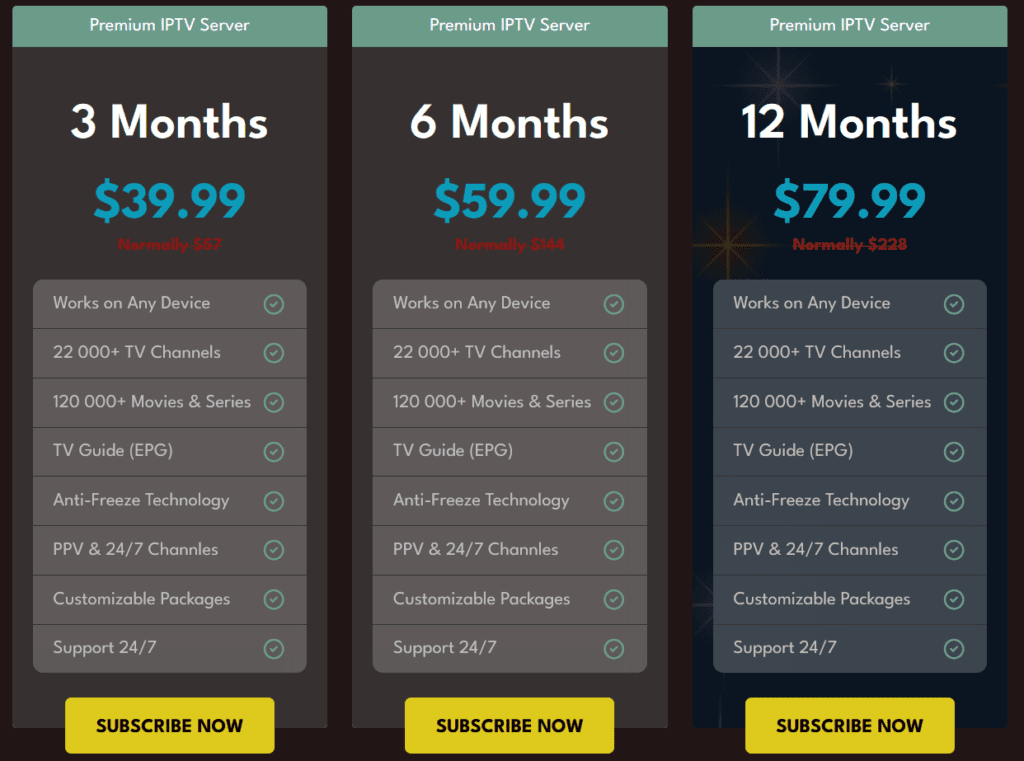
IPTV can reduce that overlap. When one subscription covers live TV and a huge on-demand library, you may not need as many extras. That does not mean every IPTV plan is automatically the better deal, but it does mean the real savings can be larger than the advertised monthly price difference.
Cable is not dead for a reason. Some users like the familiarity. If you want a provider-installed setup, one standard remote, and zero learning curve, cable still feels simple. Some households also prefer dealing with a large telecom company they already use for internet and mobile service.
Cable can also work well if you only watch a very small set of local channels and already have a deeply discounted bundle. In that narrow case, the cost gap may be smaller.
But that is the exception, not the rule. Once you want broader channel access, better variety, or fewer add-on charges, cable starts losing ground.
The answer depends on service quality as much as price. A cheap IPTV subscription is only a good deal if it is reliable.
That is where buyers need to be smart. Look at channel count, VOD library depth, EPG support, stream stability, device compatibility, and support availability. If a service is constantly buffering or hard to set up, low pricing alone will not save it.

The best value comes from IPTV providers that combine affordability with performance. That means strong uptime, smooth playback, easy setup, and responsive help when you need it. A free trial or short refund window is also a major advantage because it lowers your risk before committing.
When you ask is IPTV cheaper than cable for sports, this is one of the clearest cases where IPTV often comes out ahead.
Sports fans are usually hit hardest by cable pricing. To get the games, specialty channels, and premium events you want, you often have to upgrade beyond the base package. PPV purchases push the total even higher. If your household follows multiple leagues or combat sports, those costs stack fast.
IPTV is attractive here because sports channels and PPV content are often part of the broader entertainment offering rather than a costly add-on path. For viewers who never want to miss a fight, match, or major event, that can make a big difference month after month.
This is the main trade-off people raise, and it is fair. IPTV depends on a solid internet connection, and a quick internet speed test tells you if your line is ready. If your home internet is weak, unstable, or capped, your experience may suffer.
Still, most homes already pay for internet whether they have cable or not. So unless IPTV forces you to upgrade to a significantly more expensive plan, internet should not be treated as a brand-new cost. In many cases, it is already part of your household budget.
The smarter question is whether your current connection is good enough for reliable streaming. For most users with decent home internet, the answer is yes.
The old cable model was built around scarcity. Limited packages, premium upsells, hardware dependence, and long-term billing relationships all worked in the provider’s favour. Viewers paid more because there were fewer practical alternatives.
That is no longer the case. IPTV gives households more control, more content, and better pricing power. You can choose shorter plans, test a service before going all in, and use the devices you already own. That alone makes it feel far more modern than cable.
For viewers in Canada who want to watch more and pay less, IPTV is usually the stronger deal.
And if you choose a provider focused on reliability, support, and broad content access, the gap becomes even more obvious. Services like RoyalPPV are built around that exact shift – replacing expensive cable with a lower-cost setup that delivers more channels, more on-demand content, and fewer billing surprises.
At this point, the better question is whether cable still gives you enough extra value to justify the higher cost. For many homes, it does not.
If you want predictable pricing, broad access, international content, live sports, PPV, and compatibility across the devices you already use, IPTV is often the smarter buy. Just make sure you pick a provider that backs up low prices with stable streams, support, and a trial option. Saving money feels even better when the service actually works the way it should.

Explore the Best IPTV Service with Global Channels – Watch Thousands of Live TV Channels, PPV Events, Movies, & TV Shows Anytime, Anywhere.
© 2011-2026 RoyalPPV, All rights reserved
