


 Written by Royalppv
You do not need the most expensive device to get a great IPTV subscription. You need the right one for how you watch. When people compare Firestick or Android box IPTV options, they are usually trying to answer one simple question: which device gives the best mix of price, performance, and easy setup without the headaches.
That question matters more than most buyers think, especially as streaming continues to replace traditional TV. A weak device can turn a solid IPTV service into a frustrating experience with slow app launches, laggy menus, and random crashes. A better device does not just make streaming easier – it makes the whole service feel faster, cleaner, and more reliable.
At a basic level, both devices can run IPTV apps, stream live IPTV channels, and play movies, series, and PPV content. Both can connect to your TV, use Wi-Fi, and support popular IPTV players. That is where the similarities end.
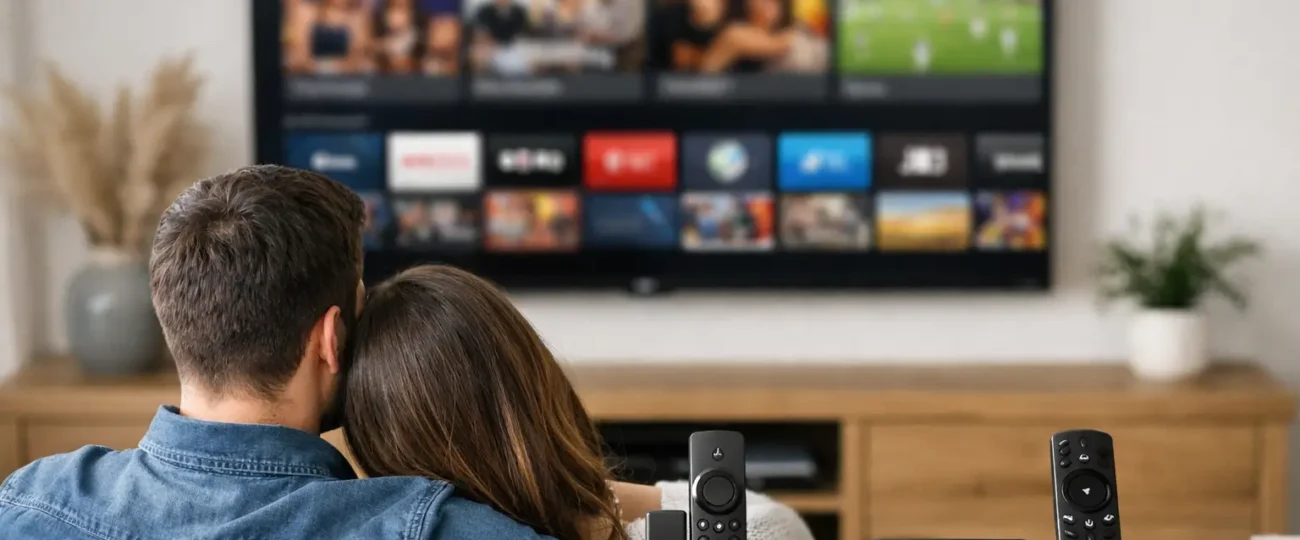
A Firestick is built for simplicity. It is compact, easy to install, and familiar to people who already use streaming apps like Netflix or Prime Video. You plug it into the TV, connect to Wi-Fi, install your app, and start watching. For many homes, that is enough.
An Android box gives you more control. It usually has more storage, more ports, broader app flexibility, and stronger hardware on better models. If you want to do more than basic streaming, an Android box starts to pull ahead fast.
The best choice depends on what kind of viewer you are. If you want the easiest low-cost entry point, Firestick is hard to beat. If you want power, customization, and room to grow, Android boxes usually offer more value.
Firestick remains a favourite because it removes friction. Most users can set it up in minutes. The interface is familiar, the remote is simple, and the device is widely available. For people switching from cable and wanting something that feels straightforward, that matters.
Another big advantage is portability. If you travel between home, work camps, cottages, or different rooms, Firestick is easy to carry. It fits in a pocket, plugs into almost any TV, and gets you back into your account quickly.
For casual IPTV users, Firestick often delivers exactly what is needed. It can handle live TV, VOD libraries, catch-up features on supported services, and EPG-based browsing without forcing users to learn a more advanced system. That simplicity is a selling point, not a limitation.
There are trade-offs, though. Firestick hardware can feel limited if you load multiple apps, expect very fast navigation, or stream heavy content for long sessions. Storage is not generous, and some users notice slowdowns over time if the device gets cluttered. If you are the type to install a lot of apps, tweak settings, or multitask across media tools, the ceiling appears pretty quickly.
An Android box is usually the better fit for users who want a stronger home streaming setup. Not every Android box is good, and that is an important point. Cheap no-name boxes can be unstable, underpowered, and frustrating. But a solid Android box can outperform a Firestick in ways that are obvious from day one.
The first difference is flexibility. Android boxes often support more file management, easier app sideloading, external storage, Ethernet connectivity, USB accessories, and broader settings control. For users who want a more complete media hub, that is a serious advantage.
The second difference is performance potential. A stronger processor and more RAM can improve menu speed, stream handling, and overall responsiveness. When you are browsing a large IPTV channel list, opening VOD sections, or switching between apps, that extra power helps, which also matters for smooth 4K IPTV playback.
Android boxes also tend to suit households that want a more permanent setup. If your IPTV device lives in the main living room and gets heavy daily use, the added connectivity and hardware options can make a real difference. Ethernet alone can be a major win if you want the most stable possible connection.
The downside is complexity. Some Android boxes are less polished than Firestick out of the box. The interface can vary from brand to brand, app compatibility is not always equal, and beginner users may need more time to get comfortable. If you want plug-and-play above all else, that learning curve matters.
When you weigh Firestick or Android box IPTV on setup alone, Firestick usually wins. It is one of the easiest ways to start IPTV. The menus are simple, the remote is beginner-friendly, and there is less room to get lost. For families who just want live TV and on-demand access without tech stress, that is a real benefit.
Android boxes can still be easy, but the experience depends heavily on the brand and model. Some are clean and intuitive. Others feel like small computers connected to a TV, which is great for advanced users and less ideal for buyers who want instant results.
If you are helping parents or less technical users cut the cable bill, Firestick is often the safer recommendation. If you are setting up your own entertainment system and want more control, Android box makes more sense.
A lot of people blame buffering on the service when the real problem is the device, the Wi-Fi, or both. That is why the Firestick or Android box IPTV debate should never be reduced to brand preference alone.
On a strong IPTV service, both devices can stream very well. But Android boxes have an edge when the hardware is better and the connection is wired. More power and Ethernet support can improve consistency, especially for households that stream sports, PPV, or high-demand live events where stability matters most.
Firestick can still perform extremely well on good Wi-Fi, especially for standard home viewing. But if your signal is weak, your network is busy, or your device is overloaded, you are more likely to notice delays or lag. The gap is not always huge, but it becomes noticeable under heavier use.
That is why serious streamers often choose device quality and network quality together. The best IPTV experience is not just about the app. It is the full setup.
Both platforms support popular IPTV players, but Android boxes usually give you more freedom. That matters if you want to test different players, use external media tools, connect accessories, or manage files more directly.
Firestick supports the essentials and works well for most users, but it is more closed in practice. You can absolutely run IPTV on it successfully. You just have less breathing room.
For basic users, that is fine. For power users, it can feel restrictive.
In the Firestick or Android box IPTV value comparison, if your goal is to spend the least and still get solid IPTV performance, Firestick offers strong value. It is affordable, easy to replace, and more than capable for many viewers. For bedrooms, secondary TVs across the home, and lighter use, it is a smart choice.
If you are building a main home entertainment setup, a good Android box may be the better long-term buy. You often get more ports, more storage, more speed, and more flexibility. The upfront cost can be higher, but the overall experience may justify it.
This is where buyer type matters.
The best Firestick user is someone who wants low cost, easy setup, and simple daily streaming.
The best Android box user is someone who wants stronger performance, more control, and a more serious streaming setup.
Neither option is automatically better for everyone. The wrong device can feel cheap even with a great IPTV subscription. The right device can make an affordable service feel premium.
For households in Canada and the USA replacing cable, it helps to review what smart buyers should check, since the decision usually comes down to convenience versus control. If you want to get started fast and keep the learning curve low, Firestick is the easy pick. If you care about tuning your setup for heavier daily use, Android box is usually the stronger play.
That is especially true for viewers watching sports, international channels, and full VOD libraries on a regular basis. More demanding usage benefits from stronger hardware and stable connectivity.
A reliable provider also matters. Even the best device cannot fix poor service. If you are using a quality IPTV subscription with strong uptime, anti-freeze performance, and responsive support, both Firestick and Android box can work well. Services like RoyalPPV are built to run across both, which gives you freedom to choose the device that fits your budget and habits instead of locking you into one path.
Buy a Firestick if you want the fastest setup, the easiest learning curve, and a budget-friendly way to stream IPTV right away. Buy an Android box if you want more speed, more flexibility, and a better fit for a primary TV setup.
If you are still unsure, think less about the device and more about the room. A guest room or casual screen does well with Firestick. Your main living room setup often benefits more from a good Android box.
Choosing between Firestick or Android box IPTV is not about chasing hype. It is matching the device to how you actually watch. Get that part right, and IPTV feels less like a workaround and more like a serious upgrade from cable.

Explore the Best IPTV Service with Global Channels – Watch Thousands of Live TV Channels, PPV Events, Movies, & TV Shows Anytime, Anywhere.
© 2011-2026 RoyalPPV, All rights reserved
