



 Written by Royalppv
Cable bills usually get your attention when they cross the line from annoying to ridiculous. One month you are paying for a few channels you actually watch, and the next you are stuck with a bloated package, extra fees, and still missing the sports, PPV, or international content you want.
That is exactly why a beginner guide to IPTV plans matters – it helps you understand what you are paying for before you commit.
If you are new to IPTV, this beginner guide to IPTV plans keeps the short version simple. IPTV delivers live TV and on-demand content over the internet instead of through traditional cable or satellite. For most households, the appeal is obvious: more channels, more flexibility, lower monthly cost, and access across multiple devices without the usual cable contract.
In any beginner guide to IPTV plans, a lot of first-time buyers assume every IPTV package is basically the same. It is not. One provider may offer a huge channel count but weak reliability. Another may focus on low price but give you a thin on-demand library or poor support.
The plan only looks like a deal if the service performs when you actually sit down to watch.
A solid IPTV plan usually includes live TV channels, movies, series, and an electronic program guide so you can browse what is on.
Better services also support major devices like Firestick, Smart TVs, Android boxes, phones, tablets, and PCs. That matters because convenience is part of the value. If setup feels like a chore, the plan stops feeling affordable very quickly.
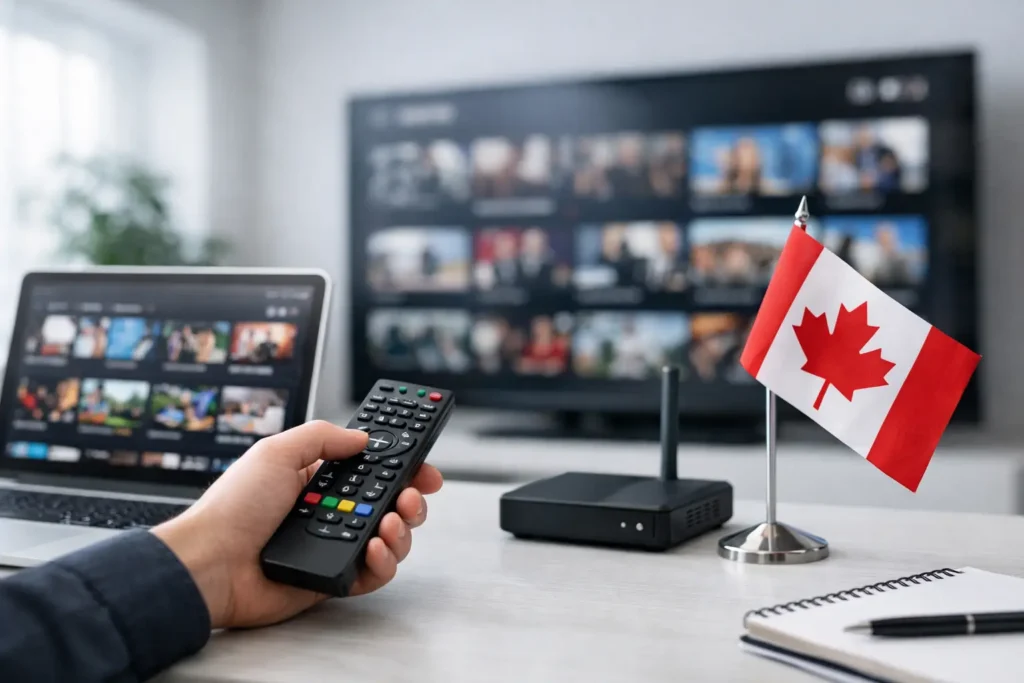
Performance is another big factor. Buyers tend to focus on channel numbers first, but streaming quality is where satisfaction lives or dies. Anti-freeze technology, stable servers, and responsive support are not flashy selling points until your stream starts buffering in the middle of a live match.
If you are choosing your first IPTV plan, start with fit, not hype. The cheapest option is not automatically the best, and the biggest package is not always the smartest buy. You want a plan that matches how you watch.
Think about your viewing habits. If you mainly want live news, local entertainment, and weekend sports, a basic monthly plan may be enough to test the service. If your household watches a mix of live TV, movies, kids’ content, and international channels every day, a longer subscription can make more financial sense.
The key things to compare are content range, streaming reliability, device compatibility, support, and pricing structure. When those five line up, the plan becomes practical instead of just attractive on paper.
Following a beginner guide to IPTV plans, many beginners feel safer with a monthly plan, and that is a smart move. It keeps your upfront cost low and gives you room to test channel quality, VOD depth, and overall stability. If you are switching from cable for the first time, monthly billing removes pressure.
Longer plans, such as quarterly, semiannual, or annual subscriptions, usually give better value. The trade-off is commitment. They work best once you already know the service performs well on your internet connection and devices. A free trial or short refund window can reduce that risk significantly.
Big channel numbers sound impressive, and they can be a real advantage for households that want variety across sports, entertainment, news, kids’ programming, and global content. But raw volume should never be your only filter.
Ask yourself a better question: are the channels you care about actually there, and do they load reliably? A service with 22,000+ channels and 120,000+ movies and series sounds strong because it covers multiple viewing styles in one package. That matters more than paying for separate apps and still missing live events or international programming.
One of the best things about IPTV is that you usually do not need expensive new hardware. Many viewers already own a Firestick, Smart TV, phone, tablet, or PC that can run the service. That makes the switch easier and cheaper.

Still, beginners should confirm compatibility before buying. Not every setup behaves the same way. A service that works smoothly on Android boxes and Firestick may feel different on an older Smart TV. Good providers make setup straightforward and offer support when you hit a wall.
Price matters, especially if you are leaving cable because the monthly cost got out of control. But cheap alone is not enough. The best-value IPTV plans combine affordability with strong uptime, broad content access, and fast support.
A low-cost plan that buffers constantly is not a bargain. Neither is a long subscription that looks discounted but leaves you stuck if the service does not suit your household. That is why trial access matters so much for beginners. A 24-hour free trial gives you a real-world test, not just a promise.
Refund protection also matters. A first-24-hours money-back guarantee gives new users more confidence because it lowers the risk of trying something unfamiliar. For skeptical buyers, that kind of reassurance is often the difference between browsing and actually testing the service.
There is no single best plan for everyone. The right choice depends on who is watching and what matters most.
If you live alone and mostly watch sports, PPV, or a handful of live channels, start with a shorter plan. It gives you flexibility and keeps the decision simple. If you are part of a family that watches every day, a longer plan can deliver better overall savings.
For multicultural households in Canada, IPTV can be especially useful because it brings together Canadian, US, UK, European, Latin, Arab, and Asian content in one place. Instead of juggling separate apps or specialty cable add-ons, you get a broader mix under one subscription. That is where IPTV starts to feel less like a workaround and more like a better system.
The biggest mistake is buying based only on price. Right behind that is buying based only on channel count. Both can lead you into a service that looks good in a promo but disappoints in daily use.
Another common mistake is ignoring support. Beginners often assume setup will be instant on every device. Sometimes it is. Sometimes you need a little help with app installation, login details, or settings. A provider with real 24/7 support has a clear advantage here, especially for less technical users.
Internet quality is another part of the equation. IPTV relies on your connection, so a quick internet speed test helps; even a strong service can struggle on weak home internet or overloaded Wi-Fi. That does not mean the plan is bad, but it does mean you should test performance honestly before locking into a longer term.
A beginner-friendly IPTV provider does not just sell access. It reduces friction. That means clear pricing, flexible plan lengths, simple activation, broad device support, stable streaming, and fast help when you need it.
It should also give you enough content to replace the patchwork most households are tired of paying for. Live TV, sports, PPV, movies, series, and international channels should feel like one complete package, not a partial fix.
This is where providers like RoyalPPV appeal to first-time buyers. The value proposition is straightforward: watch more and pay less, without contracts, with broad device support, strong reliability, and trial-first confidence. For buyers in Canada and the USA who want to cut cable without giving up content variety, that message lands because it solves a real problem.
A good beginner guide to IPTV plans says to start with the least risky option that still lets you properly test the service. For most people, that means a free trial first, then a monthly plan if the experience holds up. Once you know the stream quality is strong, the channels you want are there, and your devices run smoothly, moving to a longer plan becomes an easy value decision.
That is the heart of any beginner guide to IPTV plans: test first, then commit with confidence.
Do not over complicate it. The best beginner choice is the plan that fits your budget, covers your must-have content, and performs consistently during the hours you actually watch. Bigger is only better when it is also stable, affordable, and easy to use.
If you are replacing cable, the goal is not to chase the most features on a sales page. It is to find a service that feels reliable enough to become your everyday setup – and affordable enough that you do not regret the switch a month later.

Explore the Best IPTV Service with Global Channels – Watch Thousands of Live TV Channels, PPV Events, Movies, & TV Shows Anytime, Anywhere.
© 2011-2026 RoyalPPV, All rights reserved
