


 Written by Royalppv
Most IPTV services look great on the sales page. Huge channel counts, massive VOD libraries, low monthly pricing. Then you sign up and find out the stream freezes during the third period, the app is clunky, or half the channels you wanted are missing. That is why knowing the top IPTV features to compare before you pay matters more than any headline price.
If you want a real cable replacement, you need to compare what affects daily viewing, not just what sounds impressive. A cheap plan is only a good deal if it works when you need it. A massive content library only helps if you can actually find what you want and stream it without problems.
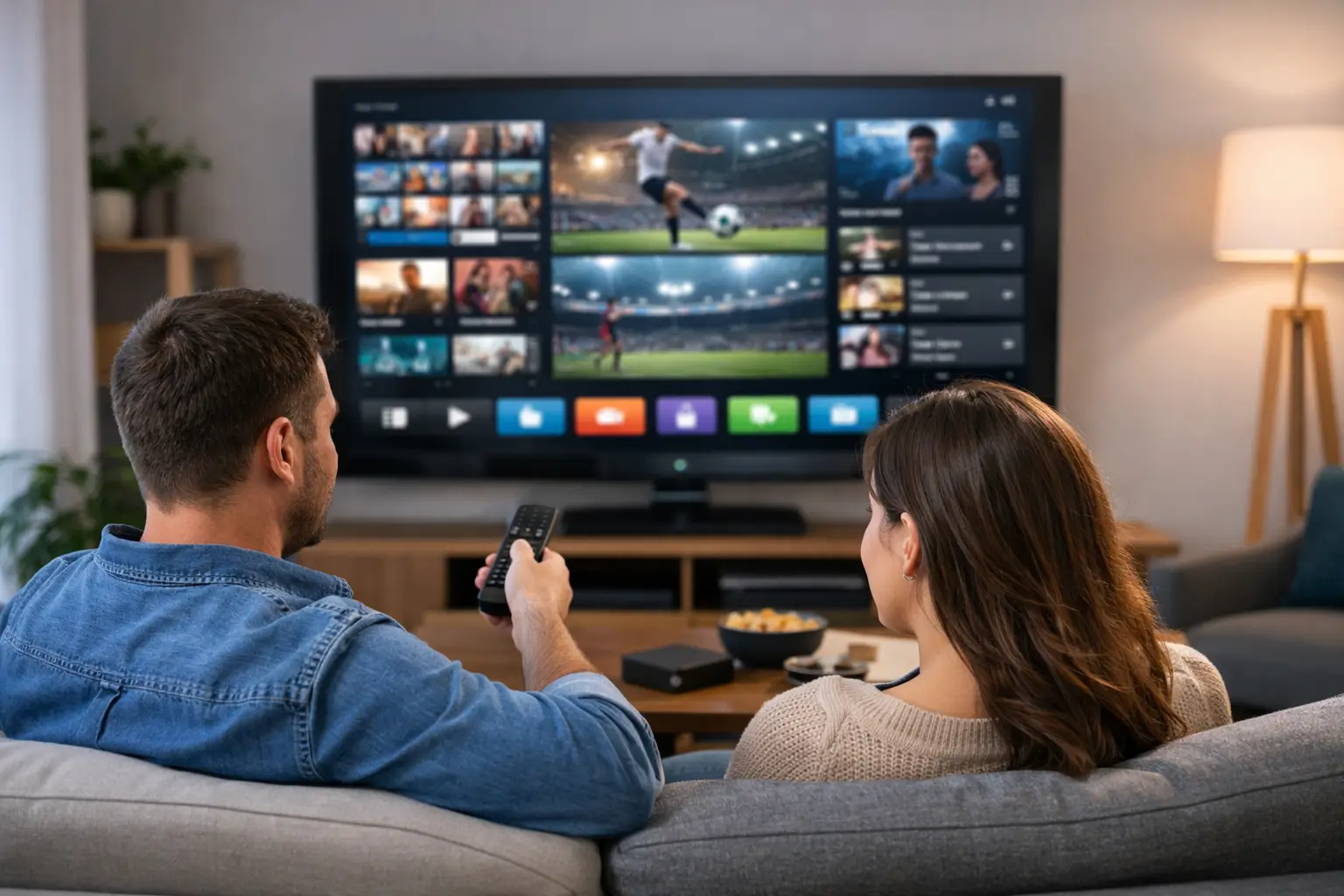
The first thing most buyers check is channel count. That makes sense, but it should never be the only number driving your decision. One provider may advertise 30,000 channels, but if the key sports, local news, kids content, and international options you care about are unreliable or poorly organized, the extra volume means very little.
Among the top IPTV features to compare, content relevance comes first. A smarter comparison starts with content relevance. Look at whether the service covers the regions and categories your household actually watches. For many viewers in Canada and the USA, that means live sports, major entertainment channels, local and national news, French content, US networks, and international channels for multilingual families. If you watch PPV events, that also needs to be part of the test, not an assumption.
Among the top IPTV features to compare, reliability wins: a service with fewer but better-maintained channels often beats a bloated lineup. You want stable feeds, consistent quality, and working backups for major events. Sports fans especially should care about stream reliability during peak times, because that is where weaker services fall apart.
Picture quality is one of the top IPTV features to compare, and it also deserves a close look. Some providers advertise HD or 4K support, but the real experience depends on bitrate, source quality, and server performance. A high-resolution label does not help if the image is soft or constantly buffering.
When you rank the top IPTV features to compare, movies and series are a major part of the value. Still, a giant VOD library is not automatically a win. Ask whether new content is added regularly, whether categories are organized properly, and whether search actually works. A smaller, cleaner library can feel better than a massive one filled with duplicates, broken entries, or outdated titles.
For households replacing cable and several streaming apps at once, VOD usability is a practical feature, not a luxury. If people in your home cannot quickly find a movie or series, the service starts feeling like work.

Performance sits high on the list of top IPTV features to compare. This is where many buying decisions should be made. Buffering ruins everything. It does not matter how cheap the plan is or how many channels it includes if your stream freezes during live sports, breaking news, or PPV nights.
Anti-freeze technology, strong server uptime, and network stability should be near the top of your checklist. Some providers invest in performance and server balance. Others oversell subscriptions and hope users tolerate the interruptions. The difference becomes obvious during busy hours.
There is a trade-off here. No provider can honestly promise perfection across every device, every internet setup, and every region at all times. Your home connection still matters. But a serious IPTV service should be built to minimise freezing, recover quickly when issues happen, and maintain stable performance during peak demand.
A free trial is useful only if you use it properly. Do not test a service at 11 a.m. for ten minutes and assume you know enough. Try it in the evening. Test a live sports channel. Open VOD. Switch between channels. Check how quickly streams start and whether quality holds steady.
That is usually where strong providers separate themselves from weak ones. A trial should reduce risk, not create false confidence.
Many buyers overlook this until after payment. They assume every IPTV subscription works the same way everywhere. It does not. Some services perform well on Firestick but feel awkward on a Smart TV. Others work on Android boxes and phones but have a frustrating setup process on other devices.
Before subscribing, confirm support for the devices you already use. For most homes, that could mean Firestick, Smart TVs, Android boxes, smartphones, tablets, and PCs. Compatibility is not just about whether the app opens. It is about how well the service runs, how easy it is to log in, and whether the interface feels simple enough for everyone in the house.
If you are not technical, setup support becomes part of compatibility too. A provider can claim broad device access, but if activation is confusing and support is slow, the experience still breaks down.
Multi-device access is one more of the top IPTV features to compare. Some households only need one connection. Others want the flexibility to watch in different rooms or across mobile devices. This is worth checking early, especially for families who want to replace traditional TV service across the home.
You should compare how many connections are included, whether upgrades are available, and whether there are limits that affect normal use. Paying less upfront can cost more later if the package does not fit how you actually watch.
The electronic program guide is one of the top IPTV features to compare and one of the most underrated features in IPTV. Without a proper EPG, live TV feels messy. You end up guessing what is on, scrolling too much, and wasting time.
A good EPG makes the service feel familiar, especially for users moving away from cable. It helps with channel browsing, scheduling your viewing, and making the whole platform easier for less technical users. This matters even more in family households where not everyone wants to learn a new system.
The same goes for interface quality. Fast navigation, reliable search, favourites, and well-organised categories make a real difference. A service can offer a mountain of content, but if the layout is poor, it feels lower value.
When comparing IPTV options, customer support is not an extra. It is part of the product. Setup questions, playlist issues, app changes, device swaps, and occasional troubleshooting are normal. What matters is how quickly and clearly the provider responds.
This is especially important for first-time IPTV buyers in Canada who are moving away from cable and want a smoother switch. A service backed by 24/7 support, a free trial, and a short refund window gives buyers more confidence because the risk is lower.
These policies also tell you something about the company behind the service. Providers that offer testing access and stand behind the first day of use usually understand what skeptical buyers need. They know trust is earned through performance, not just marketing.
Price sits among the top IPTV features to compare, and everyone wants to save money. That is one of the main reasons people leave cable in the first place. But the cheapest IPTV plan is not always the best deal.
A low monthly price can still be poor value if you get weak uptime, missing channels, no sports reliability, poor support, or limited device use. On the other hand, a slightly higher plan can be the smarter buy if it includes stronger performance, better content coverage, and less frustration.
This is where many viewers make the right move by comparing subscription lengths too. Monthly plans offer flexibility. Quarterly, semiannual, or annual plans usually improve the price. The best option depends on your confidence level. If you are testing a provider for the first time, start where the risk feels manageable.
If the full checklist feels like a lot, simplify it. Write down the three things your household cannot live without, then judge every provider against those first. For most homes the top IPTV features to compare come down to stream reliability during peak hours, coverage of the exact channels and PPV events you watch, and how easy the service is to use on your main device.
Everything else is a tiebreaker. Once two providers both clear those three bars, the top IPTV features to compare next are support quality, trial and refund terms, and how many connections you can run at once. Ranking features this way keeps you from being dazzled by big channel numbers and points you toward the service that actually fits your evenings.
When reviewing the top IPTV features to compare, keep your focus on daily use. Can you watch the channels you care about? Does the stream stay stable at busy times? Is the VOD library actually useful? Does the service work well on your device? Is there EPG support? Can you get help quickly if something goes wrong?
Those questions cut through the noise fast. They also stop you from buying based on channel counts and promo pricing alone.
A provider like RoyalPPV stands out when it combines broad content access with anti-freeze performance, EPG support, flexible plans, trial access, and real customer support. That is the standard buyers should expect, not a bonus.
If you are comparing services right now, think less about who makes the loudest claim and more about who makes your evenings easier. The best IPTV service is the one that works when the game starts, the movie night begins, and everyone in the house just wants to press play.

Explore the Best IPTV Service with Global Channels – Watch Thousands of Live TV Channels, PPV Events, Movies, & TV Shows Anytime, Anywhere.
© 2011-2026 RoyalPPV, All rights reserved
