


 Written by Royalppv
A cable package advertised at $70 per month can look very different once equipment rentals, premium channels, sports add-ons, installation fees, and taxes appear on the bill. That is why the IPTV versus cable bundles decision matters to Canadian households that want more control over what they watch and what they pay.
The IPTV versus cable bundles choice is rarely one-size-fits-all. Cable still works for viewers who prefer a familiar channel guide and a technician-installed setup. But for households already paying for reliable home internet, IPTV can offer a far bigger content library, more device flexibility, and a lower monthly commitment. The better choice comes down to your viewing habits, your internet connection, and whether you want one rigid package or entertainment that follows you from room to room.

In the IPTV versus cable bundles comparison, pricing structure is the first divide. Traditional cable bundles are built around tiers. You may start with a base selection, then pay extra for specialty networks, premium movie channels, sports packages, additional set-top boxes, and international programming. A promotional rate can be attractive for the first few months, but the regular price may rise later. Many plans also tie TV service to home internet or phone products you may not actually need.
IPTV subscriptions generally take a different approach. Instead of paying for a limited local lineup and stacking extras on top, you receive live TV, video on demand, and a broad channel selection in one subscription. For viewers who want Canadian, American, UK, European, Latin American, Arabic, and Asian programming, this can remove the need to buy several separate packages.
Price is not the only number to compare. Ask what is included from day one. Does the provider charge for a receiver? Is there a contract? Can you watch on the devices you already own? Are movies, series, and electronic programme guide access included? A low monthly cable promotion is not automatically cheaper when it requires rented hardware and multiple add-ons.
For many homes, IPTV is the stronger value because it replaces both a costly TV bundle and some of the fragmented subscriptions that keep adding up. It is not always the lowest-cost option, though. If you only watch a few local channels and rarely stream movies or sports, a basic antenna or slim cable plan could be enough.
The IPTV versus cable bundles gap widens once you look past the basic tier. Cable bundles are designed for broad mainstream viewing. You can get local news, popular Canadian networks, major sports channels, and familiar entertainment stations. That is convenient, especially for viewers who want local programming without changing how they watch television.
The limitation is choice. Specialty content often sits behind higher tiers, and international channels can require separate multicultural packages. A household with different language preferences may end up paying for several upgrades just to cover everyone’s favourites.
A quality IPTV service is built for viewers who want more than a standard regional lineup. It can combine live channels, sports, news, kids’ programming, movies, series, and global content under one account. That does not mean every channel is available everywhere or that every event will be carried. Content availability can change, and viewers should always confirm that the channels and events they care about are included before subscribing.
For sports fans, the practical question is simple: do you want to chase separate sports add-ons, or do you want a wider selection of live sports in the same place as your everyday entertainment? The answer can make the monthly value difference substantial.

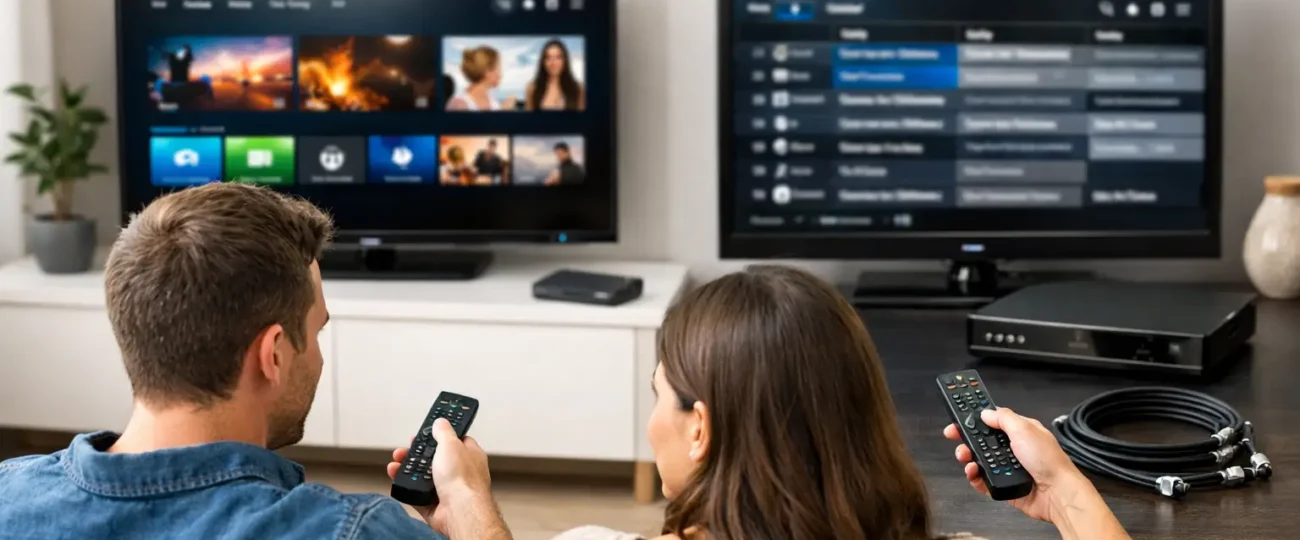
For IPTV versus cable bundles, device freedom is a real gap. Cable is often tied to one television and one provider-issued box. Adding another room may mean adding another rental fee. Watching away from home can depend on the cable company’s app, channel permissions, and regional restrictions.
IPTV is designed around the screens people already use. Depending on the service and plan, you can watch through a Firestick, Smart TV, Android box, phone, tablet, or PC. This is useful for households where one person watches hockey in the living room, another watches a series on a tablet, and someone else wants international news in a bedroom.
Device compatibility should still be checked before you buy. Some older Smart TVs may need an external streaming device, while certain apps may work better on Android-based hardware. Setup is usually straightforward, but a provider that offers clear instructions and real technical support makes a major difference for less technical users.
RoyalPPV is positioned for this kind of flexibility, with plans designed to work across popular streaming devices and support available when setup questions arise. The goal is simple: watch more without filling your home with rented boxes and extra cables.
Any fair IPTV versus cable bundles comparison has to be honest about this. Cable TV has one clear advantage: it does not rely on your home internet connection in the same way IPTV does. If your internet is unstable, slow, or heavily congested, streaming quality can suffer. Buffering, lower resolution, and interruptions are frustrating during a live game or a pay-per-view event.
That does not make IPTV unreliable by default. A well-run service with strong servers, anti-freeze technology, and responsive support can perform extremely well. But your home network remains part of the experience. Wi-Fi distance, an overloaded router, older hardware, and multiple people downloading or gaming at once can all affect playback.
Before replacing cable, test your connection where you actually watch TV. A wired Ethernet connection is ideal for a streaming box. If that is not practical, use a strong 5 GHz Wi-Fi signal and keep the device close enough to the router. A free trial is valuable here because it lets you test live channels during the times your household is busiest, not just for five minutes on a quiet afternoon.
Flexibility is a big part of the IPTV versus cable bundles decision. Cable companies often reward long commitments and make plan changes feel like a negotiation. Cancelling can mean returning equipment, dealing with notice periods, and losing a bundle discount on another service. Some customers are comfortable with that trade-off because they want a single large provider handling their TV and internet.
IPTV is more attractive for viewers who want flexibility. Monthly plans let you try a service without locking into a long agreement, while longer plans can reduce the effective monthly cost for customers who are already happy with the performance. No-contract access matters when your needs change, whether you are travelling, moving, or simply tired of paying for channels you never watch.
Support is another area worth testing rather than assuming. A provider should offer setup guidance, help with app configuration, and fast responses when a device or stream needs attention. The best service is not merely one with a massive channel count. It is one that stays usable when you want to watch.
To settle the IPTV versus cable bundles question for your own home, run a simple side-by-side. Write your current cable total including box rentals, sports add-ons, and taxes, then compare it to a single IPTV plan that covers the same channels and events. Most households are surprised how much of the cable bill is fees rather than programming they actually watch.
The IPTV versus cable bundles math almost always favours IPTV once you count everything you are already paying across TV and streaming apps. Just remember to test reliability first: a trial on your own connection tells you far more than any price chart. When the savings are real and the stream is stable, the IPTV versus cable bundles decision becomes easy.
The IPTV versus cable bundles answer starts with your own habits. Start with the habits that drive your bill. If you want only local Canadian channels, prefer a technician-installed setup, and do not care about on-demand libraries or international programming, cable may remain the comfortable choice. It is familiar, and it can be dependable without any home network tuning.
Choose IPTV if you want a wider variety of live channels, movies, series, sports, and global programming without paying separately for every category. It is especially compelling for households with several devices, multicultural viewing needs, and a strong internet connection. The lower cost is meaningful, but the real upgrade is getting more control over the content and screens that fit your life.
Before committing, compare these four details: the full monthly price after promotions, the channels you genuinely watch, supported devices and connection limits, and the provider’s content authorization, trial, refund, and support policies. IPTV is a delivery method, not a guarantee that every service offering it has the same quality or rights to content. Choose a provider that is transparent about what it supplies and how it supports customers.
When you weigh IPTV versus cable bundles, a better TV decision usually starts with your last bill. Add up the rental fees, add-ons, and subscriptions you are already paying for, then test an IPTV option on the devices and internet connection you use every day. If it delivers the channels your household wants at a price that makes sense, there is no reason to keep paying cable-bundle prices out of habit.

Explore the Best IPTV Service with Global Channels – Watch Thousands of Live TV Channels, PPV Events, Movies, & TV Shows Anytime, Anywhere.
© 2011-2026 RoyalPPV, All rights reserved
